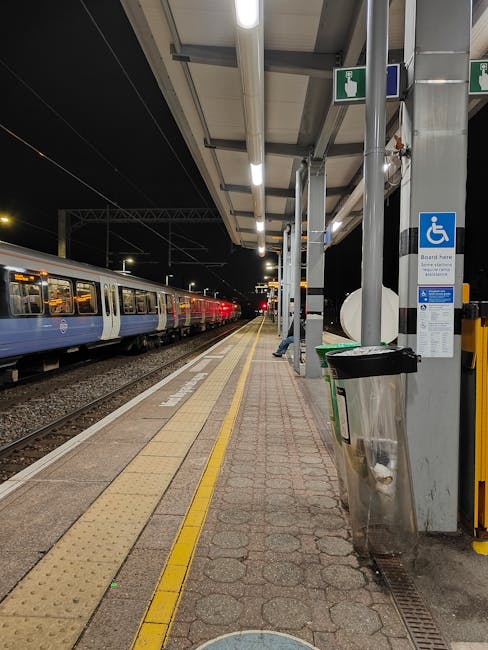
Staines TW18 Rubbish Removal Near Staines Railway Station: A Practical Local Guide
If you are trying to clear rubbish in Staines TW18 near Staines Railway Station, you probably want the same thing most people want: a quick, tidy, no-fuss way to get rid of unwanted junk without turning your day upside down. Maybe you are moving out of a flat, dealing with an office clear-out, or staring at a pile of bags, broken furniture, and awkward bits and pieces that will not fit in the car. That is exactly where Staines TW18 rubbish removal near Staines Railway Station becomes useful.
In a busy station area, timing matters. Access can be awkward, parking can be tight, and nobody wants waste hanging around outside for long. This guide explains how rubbish removal works, what to expect, how to avoid common mistakes, and when a local collection service makes life much easier. We will also cover practical steps, compliance basics, and the kinds of jobs this is best suited for.
Why Staines TW18 rubbish removal near Staines Railway Station Matters
Rubbish removal sounds simple until you are the one doing it. In practice, a station-area job can be more fiddly than it looks. There may be stairs, shared entrances, limited loading time, tight kerb space, or neighbours who would rather not see rubbish sitting out front all weekend. That is why local rubbish removal matters: it solves the problem quickly, safely, and with less disruption.
Staines Railway Station is a busy, commuter-heavy part of town. That creates a few everyday pressures. Waste can build up fast in flats, rented homes, small shops, and offices nearby. Builders, landlords, and residents often need something removed the same day or the next day, not next week. Truth be told, if you leave it too long, one bag becomes three bags, then a chair, then the "temporary" pile starts looking permanent. We have all seen that happen.
Local collection also matters because different waste types need different handling. General rubbish, furniture, garden waste, builders' debris, and office clear-outs should not all be treated the same way. A proper service should sort what can be reused, recycled, or disposed of responsibly. If you want to understand the wider service picture, the main waste removal page is a useful place to start, and there are also specific pages for furniture clearance and builders waste clearance when the job is more specialised.
Practical takeaway: near the station, the best rubbish removal is not just fast. It is organised, considerate, and able to deal with access issues without creating more hassle for you or your neighbours.
How Staines TW18 rubbish removal near Staines Railway Station Works
The process is usually straightforward, but the detail matters. Most rubbish removal jobs begin with a description of what needs clearing, where it is located, and how easy it is to access. From there, the provider can estimate the time needed, the load size, and whether any special handling is required.
For a station-area property, the conversation often includes things like parking, lift access, narrow staircases, courtyard entrances, or whether bags need to be carried through a shared hallway. That may sound mundane. It is not. It affects how smoothly the job runs and whether the collection is tidy or chaotic.
In many cases, the team arrives, assesses the load, confirms the agreed scope, then removes the waste directly. Good operators keep the route clear, protect floors where needed, and separate items sensibly. For example, a one-bedroom flat near the station might produce a mix of old packaging, a mattress, a broken desk, and general clutter. A garage in the same area might contain paint tins, garden bags, and old shelving. Different job, same principle: remove it efficiently and leave the place clean.
If you are dealing with a home clear-out rather than just loose rubbish, you may find the broader home clearance or house clearance services more relevant. For smaller jobs like an overflowing storage area, garage clearance can be a better fit. The right service depends on the actual mess in front of you, not the label on the page.
A decent collection should also be transparent about what happens next: what gets recycled, what gets reused if suitable, and what goes to lawful disposal facilities. That transparency is a trust signal. It is also just sensible.
Key Benefits and Practical Advantages
The obvious benefit is that your rubbish disappears. But the real value is broader than that.
- Speed: You can clear space quickly, which matters when a deadline is looming or a property needs to be turned around.
- Less stress: No hiring a van, no repeated trips, no wondering where to take awkward items.
- Better presentation: Useful for landlords, agents, shop owners, and anyone preparing a property for photos, viewings, or handover.
- Safer working conditions: Old waste, sharp edges, and heavy lifting are not worth improvising around.
- Local convenience: A nearby team is better positioned to handle station-area access and timing pressure.
There is also a quiet benefit that people only notice afterwards: mental relief. A cluttered hallway, a full shed, or a corner of the office packed with old stuff has a way of eating at your attention. Once it is gone, the room feels bigger. Cleaner, even lighter. It is a small thing, but not really small at all.
For commercial customers, especially small businesses in TW18, dependable clearance can help keep operations moving. A retail back room, a shared office, or a builder's working area can become far more functional once waste is removed. If that sounds like your situation, the business waste removal and office clearance pages may be useful companions to this guide.
Who This Is For and When It Makes Sense
This type of service suits a surprisingly wide range of people. It is not only for big clear-outs or building work. Often, it is the everyday jobs that benefit most.
Homeowners and tenants may need help after moving, redecorating, decluttering, or replacing furniture. Landlords and letting agents often need quick turnarounds between tenancies, especially if the previous occupants have left unwanted items behind. Local businesses may need commercial waste cleared from stockrooms, offices, or customer areas. Tradespeople may need builders' debris taken away before the next stage starts.
It also makes sense when the job is awkward rather than large. A few broken items from a flat near the station can be harder to deal with than a larger, straightforward load at ground level. If access is tight, or if you are on a short schedule, a local rubbish removal service can be the practical choice.
It is worth considering specific services if the waste falls into a clear category:
- flat clearance for apartment moves, landlord resets, or compact properties
- loft clearance for hard-to-reach stored items
- garden clearance for branches, soil bags, and outdoor waste
- furniture disposal for bulky items like sofas, tables, and wardrobes
To be fair, if your rubbish is mixed, heavy, and in a difficult spot, it is often easier to let a team assess it than to spend hours trying to categorise everything yourself.
Step-by-Step Guidance
If you want a smooth collection, a little preparation goes a long way. Here is a simple process that works well for most station-area clearances.
- Sort the waste into rough groups. Keep general rubbish, furniture, DIY waste, garden waste, and anything hazardous separate where possible.
- Identify the access route. Note stairs, lifts, parking restrictions, loading points, or any locked gates.
- List the larger items. Bulky pieces often change the logistics more than people expect.
- Take a few photos. Not fancy ones. Just clear pictures that show the volume and type of waste.
- Ask about recycling and disposal. You want to know that the waste is being handled properly, not simply tipped somewhere convenient.
- Confirm timing. If your property is near the station, try to plan around peak commuter hours when access and parking can be trickier.
- Clear a path in advance. Even a narrow clear route can save a surprising amount of time.
One small but useful tip: if you have mixed waste, put the heaviest or most awkward items closest to the exit. That sounds obvious, yet people often stack the easy stuff near the door and leave the sofa buried under it all. Then everybody sighs. It happens.
If your job is more of an overall property reset than a simple rubbish pick-up, it may help to review house clearance or home clearance options before the team arrives. The better the brief, the smoother the visit.
Expert Tips for Better Results
Here is the honest version: the most efficient rubbish removal jobs are the ones where the customer has thought through the practical stuff first. Not everything, just enough.
Tip 1: Measure the awkward items. A wardrobe, mattress, or fridge can sound manageable until it reaches a tight stairwell. A quick measurement avoids surprises.
Tip 2: Be specific about anything unusual. Old paint, electrical items, wet garden waste, or sharp broken materials should be mentioned early. No drama, just clarity.
Tip 3: Keep valuables and documents out of the waste area. People forget this more than you would think, especially during late-night clear-outs when the room looks half empty and your brain is tired.
Tip 4: Photograph the worst of it. A few honest photos save time and reduce misunderstandings. They also help if access is odd or the job spans more than one room.
Tip 5: Ask what happens to reusable items. Good operators should have a sensible approach to reuse and recycling. That may be covered on the recycling and sustainability page, which is worth a look if environmental handling matters to you.
Tip 6: Check the fine print before you book. The wording around access, waiting time, and restricted items matters more than people think. The terms and conditions can be useful here.
And if you are the sort of person who likes things neat and fair, ask about the quote structure in advance. You want to know what is included, what counts as extra, and whether the estimate is based on volume, weight, labour, or a mix of those. Simple question, big difference.
Common Mistakes to Avoid
Rubbish removal goes wrong in predictable ways. The good news? Most of them are easy to avoid.
- Underestimating the volume: What looks like "a few bags" can fill a van surprisingly quickly.
- Not mentioning access issues: A service cannot plan around a blocked driveway or a staircase it does not know about.
- Mixing incompatible waste: Some waste types need special handling and should not be bundled together casually.
- Leaving the sorting until collection day: That usually slows everything down and raises the odds of confusion.
- Assuming every item is accepted: Certain materials may be restricted, so check first rather than guessing.
- Choosing purely on price: The cheapest option is not always the one that leaves you with the least hassle. Let's face it, cheap can become expensive very quickly.
A slightly less obvious mistake is forgetting the surrounding area. Near Staines Railway Station, a collection that blocks a pavement, shared entrance, or loading space can create tension with neighbours or passers-by. Good planning avoids that. Bad planning becomes everyone's problem, and nobody enjoys that on a weekday morning.
Tools, Resources and Recommendations
You do not need much equipment for a rubbish removal job, but a few simple tools make the process easier and safer.
- Sturdy gloves: Helpful for handling sharp packaging, splintered wood, or rough edges.
- Strong bin bags or rubble sacks: Better than weak bags that split halfway down the stairs.
- Hand trolley or sack barrow: Useful for heavy items if the access route allows it.
- Basic tape measure: Handy for checking whether larger furniture can be moved without damage.
- Phone camera: Great for taking clear photos of the load and access route.
In terms of service selection, a useful recommendation is to match the provider to the job type, not just the postcode. If it is a standard mixed waste job, a general waste removal service may be enough. If it is mostly bulky household items, look at furniture clearance. If it is work-related debris, the builders waste clearance page is more relevant.
For trust and reassurance, it can also help to review the company's broader policies. About us gives you background, while insurance and safety is a sensible check if you are worried about property damage or site handling. Nobody wants scratched floors or a careless lift down the stairwell. No thanks.
Law, Compliance, Standards, or Best Practice
When rubbish is collected, it should be handled responsibly and in line with accepted UK waste practices. You do not need to become a waste law expert to book a collection, but a few basics are worth understanding.
First, waste should be passed to an operator that handles it properly and can keep a sensible record of where it goes. Second, some materials require extra care. That can include items that are sharp, heavy, potentially hazardous, or simply awkward to process. Third, good practice means separating reusable or recyclable materials where possible rather than treating everything as one big mixed load.
If you are arranging clearance for a business, the expectations are usually a bit stricter in practice because there is more risk around access, staff movement, and duty of care. That is why services such as business waste removal and office clearance are worth considering when commercial premises are involved.
There is also the practical side of safety. Clearing waste from stairwells, shared entrances, lofts, or exterior spaces near the station should be done with care to reduce slips, trips, and lifting injuries. If you are comparing providers, the pages on health and safety policy and complaints procedure can give a clearer sense of how seriously the company treats service standards. That sort of thing matters more than people admit at first glance.
One final best-practice point: do not place waste out in a shared area unless you are sure it is allowed and safe. In busy TW18 streets, that can create avoidable issues fast.
Options, Methods, or Comparison Table
Different clearance methods suit different jobs. Here is a simple comparison to help you choose without overthinking it.
| Option | Best for | Pros | Watch out for |
|---|---|---|---|
| DIY disposal | Very small, easy-to-carry loads | Can feel cheap if you already have transport | Time, lifting effort, parking, multiple trips |
| Skip hire | Longer projects with predictable waste | Good for ongoing work | Space, permits, loading limits, weather exposure |
| Professional rubbish removal | Mixed waste, bulky items, tight access, quick turnarounds | Fast, hands-off, less disruption | Needs accurate information for the best quote |
| Specialist clearance | Lofts, garages, offices, furniture, gardens, builders' waste | Tailored to the job | Only useful if the waste type matches the service |
In a station-adjacent setting, professional collection is often the most practical option because it cuts down on lifting, timing pressure, and parking headaches. If your load is mostly old household furniture, see furniture disposal. If it is outdoor clutter or a messy border area, garden clearance may be more suitable.
Case Study or Real-World Example
Here is a realistic example. A tenant in a TW18 flat a short walk from Staines Railway Station needed to vacate quickly after a move. The property had a broken desk, a small sofa, several bags of general rubbish, and a few leftover kitchen bits. Nothing dramatic, but enough to make the hallway feel cramped and the whole place look unfinished.
The main challenge was access. The flat was up a staircase, the hallway was shared, and collection had to happen without blocking neighbours or taking over the entrance. The sensible approach was simple: itemise the waste, clear a path before arrival, and keep the heavier pieces nearest the exit. The team could then work through the load without constant reshuffling.
What made the difference was not brute force. It was preparation. The tenant had photos ready, the access details were accurate, and the job was completed without fuss. By lunchtime, the flat felt different. Empty, yes, but also calmer. That is the sort of result people are really paying for, even if they do not say it out loud.
A similar pattern often applies to landlords. A property near the station may need a fast reset between occupants, especially if furniture has been left behind or storage areas have filled up. In those cases, combining flat clearance with a targeted furniture service can be the cleanest route.
Practical Checklist
Use this quick checklist before booking rubbish removal near Staines Railway Station.
- List the items that need removing.
- Separate furniture, general rubbish, and garden or builders' waste if possible.
- Take clear photos of the load.
- Note stairs, lifts, parking, and loading access.
- Move valuables, documents, and keepsakes out of the way.
- Confirm whether any items need special handling.
- Check the service scope, timings, and payment details.
- Ask about recycling and disposal practices.
- Leave a clear route to the waste area.
- Keep neighbours or building management informed if shared access is involved.
If you want a quick snapshot before you decide, here it is:
Best outcome: clear photos, clear access, clear expectations. That combination saves time, reduces stress, and usually leads to a much smoother collection.
Get a free quote today and see how much you can save.
Conclusion
Staines TW18 rubbish removal near Staines Railway Station is really about making a busy area easier to manage. When access is tight, time is short, and the waste is awkward, a local collection service can save a lot of effort. It is not just about lifting things away. It is about removing a problem cleanly, safely, and with minimal disruption.
If you are planning a clear-out, the best results usually come from a bit of prep, a realistic description of the job, and a provider that understands the local setting. That may sound simple, because it is. But simple done well is often what matters most.
And once the space is clear, you will notice it immediately. Less clutter. Less noise in the back of your mind. A fresh start, basically. Not a bad feeling at all.
Frequently Asked Questions
What does rubbish removal near Staines Railway Station usually include?
It usually includes collection and disposal of general household rubbish, bulky items, mixed waste, and in some cases specialist loads such as furniture or builders' debris. The exact scope depends on the service you choose and the items you need removed.
How quickly can rubbish be removed in TW18?
That depends on availability, access, and the size of the job. Smaller collections can often be arranged quite quickly, while larger or more complex clearances may need a bit more coordination.
Is rubbish removal better than hiring a skip near the station?
For many people, yes. A collection service is usually easier if you have limited access, no space for a skip, or a mixed load that would be awkward to load yourself. A skip can still suit longer projects, but it is not always the simplest answer.
Can furniture be taken away as part of rubbish removal?
Often, yes. Sofas, tables, wardrobes, beds, and similar bulky items are commonly removed through furniture-focused services or general clearance jobs if the load is suitable.
What should I do before the team arrives?
Sort the waste roughly, clear a path, take photos, and make sure access details are accurate. If you have anything unusual, mention it early. That saves time and helps avoid surprises.
Do I need to be at the property during collection?
In many cases, yes, or at least someone should be available to confirm the items and access. Some providers may allow different arrangements, but it is best to check in advance rather than assume.
What if the waste is in a flat with stairs or a lift?
That is very common near stations, and it is exactly why clear access information matters. Stairs, lifts, narrow corridors, and shared entrances all affect how the job is planned.
Can office or business waste be removed locally too?
Yes. Business waste removal and office clearance are common around busy transport links because companies often need quick, tidy turnaround when changing layout, location, or tenancy.
How do I know the waste will be handled responsibly?
Look for clear information about recycling, disposal, and company policies. Pages like recycling and sustainability, insurance and safety, and terms and conditions can help you judge whether the operator is set up properly.
What items are usually more difficult to remove?
Very heavy items, wet waste, sharp materials, awkwardly sized furniture, and mixed loads with restricted materials can all take more planning. It does not mean they cannot be removed, just that the collection may need more detail beforehand.
Is rubbish removal useful for landlords and letting agents?
Definitely. It is one of the most practical ways to reset a property between occupiers, especially when there is left-behind furniture, packaging, or general clutter. Speed matters a lot in that setting.
Where can I find more about the company before booking?
You can review the about us page for background, the pricing and quotes page for booking guidance, and the contact us page if you want to ask specific questions before arranging a collection.